


When designing, renovating, or building a staircase, understanding the correct names of stair parts is essential. Whether you are a homeowner, architect, contractor, interior designer, or stair builder, knowing the terminology helps communicate ideas clearly, order the correct components, and ensure every staircase is both beautiful and structurally sound.
Wood stair systems consist of dozens of individual components. While many people simply refer to "stairs" or "railings," every element has a specific function and name. Some parts provide structural support, others ensure safety, while many exist primarily to enhance the overall appearance of the staircase.
This guide explains the most important wooden stair parts, their purpose, and where they are used.

Main Structural Stair Components
A staircase begins with its structural framework. These components carry the weight of people using the stairs and support the decorative elements.
Stringer
The stringer is the structural backbone of the staircase. It supports every tread and transfers the load to the floor structure.
There are several common types:
-
Closed stringer
-
Open stringer
-
Cut stringer
-
Mono stringer (steel construction)
-
Double stringer
For wooden residential staircases, closed and cut stringers are the most common. The stringer determines:
-
staircase width
-
tread spacing
-
stair pitch
-
structural strength
Without properly designed stringers, the staircase cannot safely support loads.

Tread
The tread is the horizontal surface where people place their feet. Wood treads are manufactured from:
-
Red Oak
-
White Oak
-
Maple
-
Poplar
-
Hickory
-
Walnut
-
Ash
Important tread characteristics include:
-
thickness
-
width
-
nosing profile
-
grain direction
-
wear resistance
Hardwood treads are preferred because they withstand decades of foot traffic.

Riser
A riser is the vertical board located between two treads.
Some staircases feature:
-
closed risers
-
open risers (floating stairs)
Wood risers improve structural rigidity while creating a traditional appearance.
Stair Nosing
The nosing is the front edge of a tread that extends beyond the riser.
Its functions include:
-
increasing foot space
-
improving safety
-
reducing wear
-
creating visual depth
Modern staircases often feature square-edge nosings, while traditional homes use rounded profiles.
Stair Railing Components
The railing system protects users from falls while defining the architectural style of the staircase.
Handrail
The handrail is the component users hold while ascending or descending stairs.
Wood handrails are available in numerous profiles:
-
Colonial
-
Modern square
-
Contemporary
-
Oval
-
Traditional
-
Mission
-
Craftsman
Handrails improve safety while becoming one of the staircase's most visible design features.
Newel Post
The newel post is the largest vertical support in the railing system.
Newel posts anchor the handrail and absorb lateral forces applied to the railing.
Typical installation locations include:
-
bottom of staircase
-
top landing
-
staircase turns
-
intermediate landings
Wood newels are available in:
-
Box newels
-
Turned newels
-
Fluted newels
-
Chamfered newels
-
Custom CNC newels
Newel posts often become the visual centerpiece of an entire staircase.

Baluster (Spindle)
A baluster, sometimes called a spindle, is a vertical member installed between the tread (or shoe rail) and the handrail.
Its primary purposes are:
-
fall protection
-
code compliance
-
supporting the handrail visually
-
decorative enhancement
Balusters may be:
-
square
-
turned
-
twisted
-
fluted
-
contemporary
-
custom CNC carved
Spacing between balusters is regulated by local building codes.
Shoe Rail
A shoe rail is installed at the bottom of balusters on balconies or landings.
Instead of connecting directly into the floor, balusters fit into the shoe rail.
This creates:
-
cleaner installation
-
improved alignment
-
easier replacement
Base Rail
The base rail performs a similar function to the shoe rail but is often used on level guardrails rather than stair sections.

Decorative Stair Components
Many stair parts exist primarily to enhance appearance while still contributing to the staircase's overall integrity.
Starting Step
The starting step (also called a bullnose starting step) is the first tread at the bottom of the staircase.
Common variations include:
-
single bullnose
-
double bullnose
-
curved starting step
-
volute starting step
Starting steps create a welcoming entrance while allowing elegant baluster layouts.
Bullnose Tread
A bullnose tread features one or two rounded edges.
It is commonly installed:
-
at the bottom step
-
around curved staircases
-
at open staircase ends
Volute
A volute is the spiral-shaped beginning of a handrail.
It is typically paired with decorative starting newels and is found in traditional stair designs.
Gooseneck
A gooseneck is a curved handrail fitting used to transition between different elevations. Goosenecks are common where:
-
stairs meet landings
-
rail height changes
-
continuous handrails are required
Easings
Up easings and down easings are short transition pieces that connect handrail sections at different heights.
These fittings ensure smooth, continuous handrail movement.
Rosette
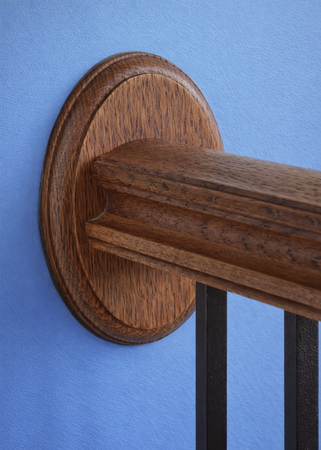
A rosette is a decorative wooden mounting block used when a handrail terminates into a wall.
Instead of cutting complex joinery, the rail ends at the rosette for a clean finish.
Stair Trim Components
Several smaller parts complete the staircase.
Skirt Board
The skirt board runs along the wall beside the staircase.
Its purposes include:
-
hiding gaps
-
protecting drywall
-
creating a finished appearance
Fillet
A fillet is a thin strip inserted between balusters in plowed handrails and shoe rails.
It locks the balusters securely in place while producing a clean installation.
Wall Rail Bracket
Although usually metal, the wall rail bracket supports wall-mounted handrails and provides proper spacing from the wall.
Stair Landings
A landing is the flat platform connecting stair flights.
Landings improve:
-
safety
-
comfort
-
accessibility
-
directional changes
Landings may include:
-
guardrails
-
newel posts
-
handrails
-
shoe rails
-
balusters.
Read also: Stair Parts Explained: Complete Guide with Diagram
Common Stair Terminology
Several additional terms are frequently encountered when discussing stair construction.
|
Stair Part |
Function |
|
Rise |
Vertical distance between treads |
|
Run |
Horizontal depth of each tread |
|
Pitch |
Stair angle |
|
Headroom |
Vertical clearance above stairs |
|
Flight |
Continuous series of steps |
|
Landing |
Flat platform between flights |
|
Guardrail |
Protective barrier at open edges |
|
Winder |
Triangular step used in turns |
|
Open Stair |
Staircase without risers |
|
Closed Stair |
Staircase with risers |
Hardwood Species Used for Stair Parts
Wood species significantly influence the durability and appearance of stair components.
The most common hardwoods include:
-
White Oak
-
Red Oak
-
Maple
-
Poplar
-
Hickory
-
Ash
-
Walnut
-
Cherry
Each species differs in hardness, grain pattern, stain absorption, and overall aesthetic.

For premium residential staircases, White Oak remains one of the most popular choices because it combines strength, durability, and timeless beauty.

Why Knowing Stair Part Names Matters
Understanding stair terminology helps everyone involved in a staircase project—from homeowners to professional builders.
Correct terminology makes it easier to:
-
order compatible stair components
-
communicate with manufacturers and contractors
-
understand architectural drawings
-
simplify staircase renovations
-
comply with building standards
-
select replacement parts accurately
Whether you're replacing a single wooden baluster or designing an entirely custom staircase, knowing the names and functions of each stair part ensures a smoother project and a better final result.
Frequently Asked Questions
What are the main parts of a wooden staircase?
The primary structural parts include the stringers, treads, risers, handrails, balusters, newel posts, and landings. Decorative elements such as volutes, rosettes, easings, and bullnose steps complete the design.
What is the difference between a baluster and a spindle?
In residential construction, the terms baluster and spindle are often used interchangeably. "Baluster" is the more technical architectural term, while "spindle" is common in everyday language and retail.
What supports the handrail?
The handrail is supported by newel posts at key structural points and by balusters along the stair run. Wall-mounted handrails are secured using wall rail brackets.
What is the first step of a staircase called?
The first step is typically known as the starting step. When it has one or two rounded projecting edges, it is also called a bullnose starting step.
Which wood is best for stair parts?
White Oak, Red Oak, Maple, Hickory, Ash, and Walnut are among the most popular hardwoods. White Oak is especially valued for its durability, attractive grain, and excellent finishing characteristics.


